
How to Choose the Best Storage Tank Manufacturer Today
Storage tanks play a vital role in almost every industrial process. From storing chemicals and water to handling food ingredients, pharmaceuticals, petroleum products, and industrial liquids, businesses depend on reliable storage systems every day. Therefore, choosing the right Storage Tank Manufacturer becomes one of the most important decisions for ensuring operational efficiency, product safety, and long-term profitability.
Modern industries require more than just large containers. Instead, they need customized storage solutions that meet industry standards, withstand harsh operating conditions, and support efficient production processes. Consequently, experienced manufacturers design storage tanks that combine durability, precision engineering, corrosion resistance, and easy maintenance.
This guide explains how a professional Storage Tank Manufacturer delivers industry-specific solutions, the different types of storage tanks available, important selection factors, and why investing in quality storage equipment improves productivity for years.
Why Choosing the Right Storage Tank Manufacturer Matters
Every industry has unique storage requirements. While one company may require hygienic stainless steel tanks for food processing, another may need corrosion-resistant vessels for aggressive chemicals. As a result, manufacturers must design tanks according to specific operational demands rather than offering generic products.
A professional Storage Tank Manufacturer understands these challenges and provides customized engineering solutions that improve both performance and safety.
Custom Storage Solutions for Different Industries
No two industries operate in exactly the same way. Therefore, customized storage tanks help companies maximize productivity while maintaining product quality.
Professional manufacturers design tanks based on several important factors, including:
- Storage capacity
- Product characteristics
- Operating temperature
- Internal pressure
- Material compatibility
- Available installation space
- Future expansion requirements
Because every production facility differs, customized tanks often perform significantly better than standard storage systems.
Chemical Industry Storage Tanks
Chemical manufacturing requires exceptional durability because many chemicals are highly corrosive or reactive.
A reliable Storage Tank Manufacturer carefully selects materials that resist corrosion while maintaining structural strength over extended periods.
Common chemical storage applications include:
- Acids
- Solvents
- Industrial chemicals
- Liquid fertilizers
- Cleaning solutions
- Petrochemical products
Advanced welding techniques further improve leak prevention and operational safety.


Food and Beverage Industry Tanks
Food manufacturers must maintain strict hygiene standards throughout production.
Therefore, stainless steel storage tanks remain the preferred solution because they offer:
- Smooth internal surfaces
- Easy cleaning
- Corrosion resistance
- Food-grade construction
- Long service life
- Minimal contamination risk
These tanks commonly store:
- Milk
- Juices
- Syrups
- Edible oils
- Process water
- Liquid ingredients
As a result, businesses consistently maintain product quality while complying with food safety regulations.
Pharmaceutical Storage Applications
Pharmaceutical production demands the highest level of cleanliness and precision.
Consequently, experienced manufacturers produce storage tanks that support sterile environments while preventing contamination.
These tanks often feature:
- Mirror-polished interiors
- Sanitary fittings
- CIP (Clean-In-Place) systems
- Temperature control
- Pressure monitoring
- High-quality stainless steel construction
Such features help pharmaceutical companies maintain strict quality standards during manufacturing.

Advanced Engineering and Manufacturing Excellence
Leading manufacturers invest heavily in engineering capabilities because precision directly affects tank performance.
Every storage tank undergoes multiple design stages before production begins.
These stages include:
1: Design Engineering
Engineers calculate structural strength, storage capacity, operating pressure, and material thickness.
Computer-aided design software helps optimize every component before manufacturing starts.
2: Material Selection
The choice of material determines the tank’s durability and resistance to corrosion.
Common materials include:
- Stainless Steel 304
- Stainless Steel 316
- Mild Steel
- Carbon Steel
- Duplex Stainless Steel
Each material serves different industrial applications depending on chemical compatibility and environmental conditions.
3: Precision Fabrication
Modern fabrication facilities utilize advanced technologies such as:
- CNC cutting
- Automatic welding
- TIG welding
- MIG welding
- Plasma cutting
- Surface polishing
These manufacturing processes improve dimensional accuracy and overall product quality.
4: Strict Quality Inspection
Quality inspection continues throughout manufacturing.
Manufacturers perform:
- Dimensional verification
- Weld inspection
- Pressure testing
- Leak testing
- Surface finish inspection
- Material certification
As a result, customers receive storage tanks that meet international quality standards while ensuring reliable long-term operation.
Storage Tank Manufacturer Solutions Across Major Industries
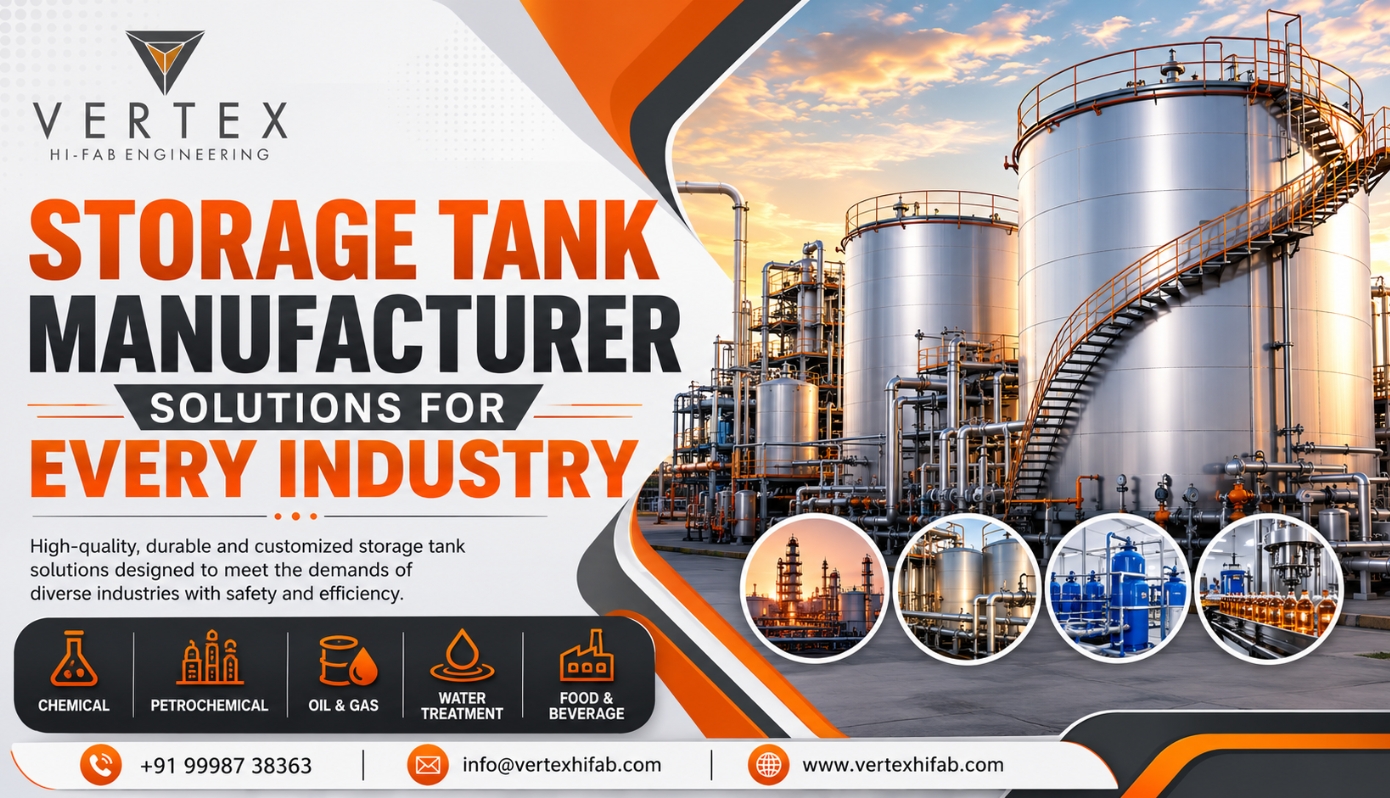
As industries continue to evolve, storage requirements become increasingly specialized. Therefore, a professional Storage Tank Manufacturer develops tailored solutions that meet industry-specific regulations, production demands, and operational goals. High-quality storage tanks not only improve efficiency but also reduce maintenance costs and enhance workplace safety.
1: Industries That Depend on Industrial Storage Tanks
Almost every manufacturing sector requires reliable storage systems for liquids, chemicals, gases, or processed materials. Consequently, selecting the right storage tank directly impacts production quality and business performance.
2: Water Treatment Industry
Water treatment plants rely on durable storage tanks for handling raw water, treated water, chemicals, and wastewater. Tanks designed for this industry offer corrosion resistance, leak-proof construction, and long operational life, ensuring uninterrupted plant operations.
3: Oil and Petrochemical Industry
The oil and petrochemical sector demands heavy-duty storage tanks capable of safely storing fuels, lubricants, solvents, and petroleum products. These tanks are engineered to withstand harsh environments, pressure variations, and chemical exposure while maintaining structural integrity.
4: Dairy and Beverage Industry
Dairy plants and beverage manufacturers require hygienic stainless steel storage tanks that preserve product quality and comply with strict food safety standards. Smooth internal finishes and sanitary fittings make cleaning easier while minimizing contamination risks.

Types of Storage Tanks Manufactured
An experienced Storage Tank Manufacturer offers a wide range of storage solutions based on application requirements.
1: Stainless Steel Storage Tanks
Ideal for food processing, pharmaceuticals, beverages, cosmetics, and chemical industries due to their corrosion resistance, hygiene, and durability.
2: Mild Steel Storage Tanks
Suitable for storing water, oils, industrial liquids, and non-corrosive materials where cost-effective storage solutions are required.
3: Vertical Storage Tanks
Designed to maximize storage capacity while minimizing floor space. These tanks are commonly used in manufacturing plants and processing facilities.
4: Horizontal Storage Tanks
Preferred for transportation, limited-height installations, and applications requiring easier maintenance access.
5: Jacketed Storage Tanks
Used where temperature control is essential, including pharmaceutical manufacturing, food processing, and chemical production.
6: Mixing and Agitator Tanks
Equipped with agitators for blending liquids, dissolving chemicals, and maintaining product consistency during production.
Benefits of Choosing an Experienced Storage Tank Manufacturer
Working with a trusted manufacturer like Vertex Hi-Fab Engineering provides several long-term advantages beyond simply purchasing a storage vessel.
1: Superior Product Quality
Experienced manufacturers use premium-grade raw materials, advanced fabrication technologies, and strict quality control procedures to deliver tanks with exceptional durability and reliability.
2: Custom Design Capabilities
Every business has unique storage needs. Customized tanks ensure the correct dimensions, capacity, fittings, insulation, and accessories for maximum operational efficiency.
3: Compliance with Industry Standards
Professional manufacturers design storage tanks according to national and international standards, helping businesses maintain safety, regulatory compliance, and product quality.
4: Long Service Life
High-quality welding, precision engineering, and corrosion-resistant materials significantly extend the operational lifespan of industrial storage tanks, reducing replacement costs.
5: Reduced Maintenance Costs
Well-designed tanks require less frequent repairs, minimize downtime, and improve production continuity, ultimately lowering overall maintenance expenses.
Factors to Consider Before Purchasing a Storage Tank
Selecting the right storage tank requires careful planning. Businesses should evaluate several critical factors before making an investment.
1: Storage Capacity
Determine both current and future production requirements to avoid undersized or oversized tanks.
2: Material Compatibility
Choose stainless steel, carbon steel, or mild steel based on the chemical properties of the stored product.
3: Installation Location
Consider available floor space, transportation access, foundation requirements, and maintenance clearance before finalizing the tank design.
4: Operating Temperature
Some industries require tanks capable of handling extremely high or low temperatures. Proper insulation and jacketing improve efficiency.
5: Pressure Requirements
Certain industrial applications demand pressure-rated storage tanks designed for safe operation under varying internal pressures.
6: Maintenance Accessibility
Features such as manholes, ladders, inspection ports, and drain valves simplify maintenance while reducing downtime.
Future Trends in Storage Tank Manufacturing
Industrial storage technology continues to evolve rapidly. As a result, modern Storage Tank Manufacturers are adopting advanced engineering solutions that improve efficiency, safety, and sustainability.
Emerging trends include:
- Smart storage tank monitoring systems
- IoT-based level and temperature sensors
- Automated cleaning systems
- Energy-efficient insulation technologies
- Sustainable manufacturing practices
- Digital quality inspection systems
- Predictive maintenance using artificial intelligence
These innovations help industries reduce operational costs while improving process reliability and environmental performance.
Frequently Asked Questions (FAQs) Of Pressure Vessel
A professional Storage Tank Manufacturer follows engineering standards, uses certified materials, performs quality testing, and offers customized solutions. This ensures better durability, safety, and long-term performance than general fabrication. The ideal material depends on your application. Stainless steel is suitable for food, pharmaceutical, and chemical industries, while mild steel or carbon steel is often used for water, oil, and non-corrosive liquid storage. Yes. Most experienced manufacturers design storage tanks according to your required capacity, installation space, operating pressure, temperature, and industry standards to ensure maximum efficiency. Evaluate your daily production, storage duration, future expansion plans, and available installation space. A reliable manufacturer can recommend the most suitable tank capacity based on these requirements. Yes, many stainless steel grades, such as SS 304 and SS 316, offer excellent corrosion resistance and are widely used for storing chemicals, solvents, acids, and pharmaceutical products, depending on compatibility. Industrial storage tanks are widely used in: Chemical manufacturing No FAQ found.
Food processing
Dairy industry
Pharmaceutical production
Water treatment plants
Oil and gas
Petrochemical industries
Beverage manufacturing
Cosmetics production
Agriculture
A quality storage tank should include pressure relief systems, leak-proof welding, inspection manholes, level indicators, venting systems, corrosion-resistant materials, and easy maintenance access for safe operation. Regular inspections should be conducted based on industry regulations and operating conditions. Most businesses perform routine visual inspections monthly and comprehensive maintenance annually to ensure safety and efficiency. Yes. Outdoor storage tanks are specially designed with weather-resistant coatings, corrosion protection, insulation (if required), and durable structural support to withstand harsh environmental conditions. With proper material selection, regular maintenance, and correct operating conditions, a high-quality storage tank can provide reliable service for 20 to 30 years or even longer, depending on its application. Vertex Hifab manufactures high-quality industrial storage tanks using advanced fabrication technology, premium raw materials, and strict quality control. The company offers customized storage solutions for chemical, pharmaceutical, food processing, dairy, water treatment, oil, and various industrial applications across India. Yes. Vertex Hifab designs and manufactures customized storage tanks based on capacity, material, pressure, temperature, industry requirements, and installation conditions. The company serves businesses across Ahmedabad, Gujarat, and all major industrial cities in India with reliable and durable storage solutions. No FAQ found.
Conclusion: Why Choosing the Right Storage Tank Manufacturer Is a Smart Long-Term Investment
Selecting a trusted Storage Tank Manufacturer is about much more than purchasing a storage vessel. It is an investment in product safety, operational efficiency, regulatory compliance, and long-term business growth. High-quality storage tanks minimize maintenance costs, improve production reliability, and ensure safe handling of valuable materials across various industries.
Whether your business operates in food processing, pharmaceuticals, chemicals, dairy, water treatment, oil and gas, or manufacturing, choosing a customized storage solution can significantly improve overall plant performance.
If you are looking for durable, precision-engineered, and customized industrial storage tanks, Vertex Hifab Engineering is committed to delivering reliable solutions designed to meet the highest quality standards. From concept and design to fabrication and installation support, our team helps businesses build efficient storage systems that perform reliably for years to come.
Contact Vertex Hifab today to discuss your industrial storage tank requirements and discover the right solution for your business.