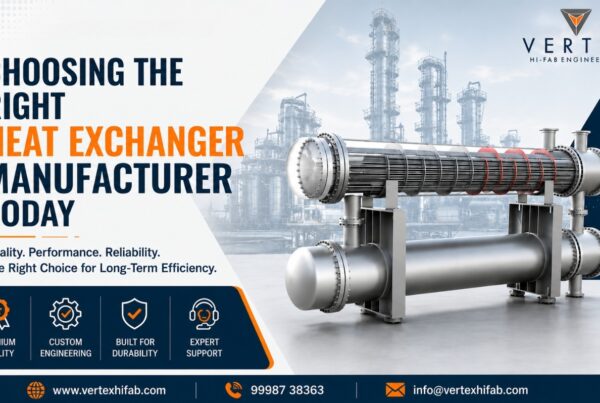
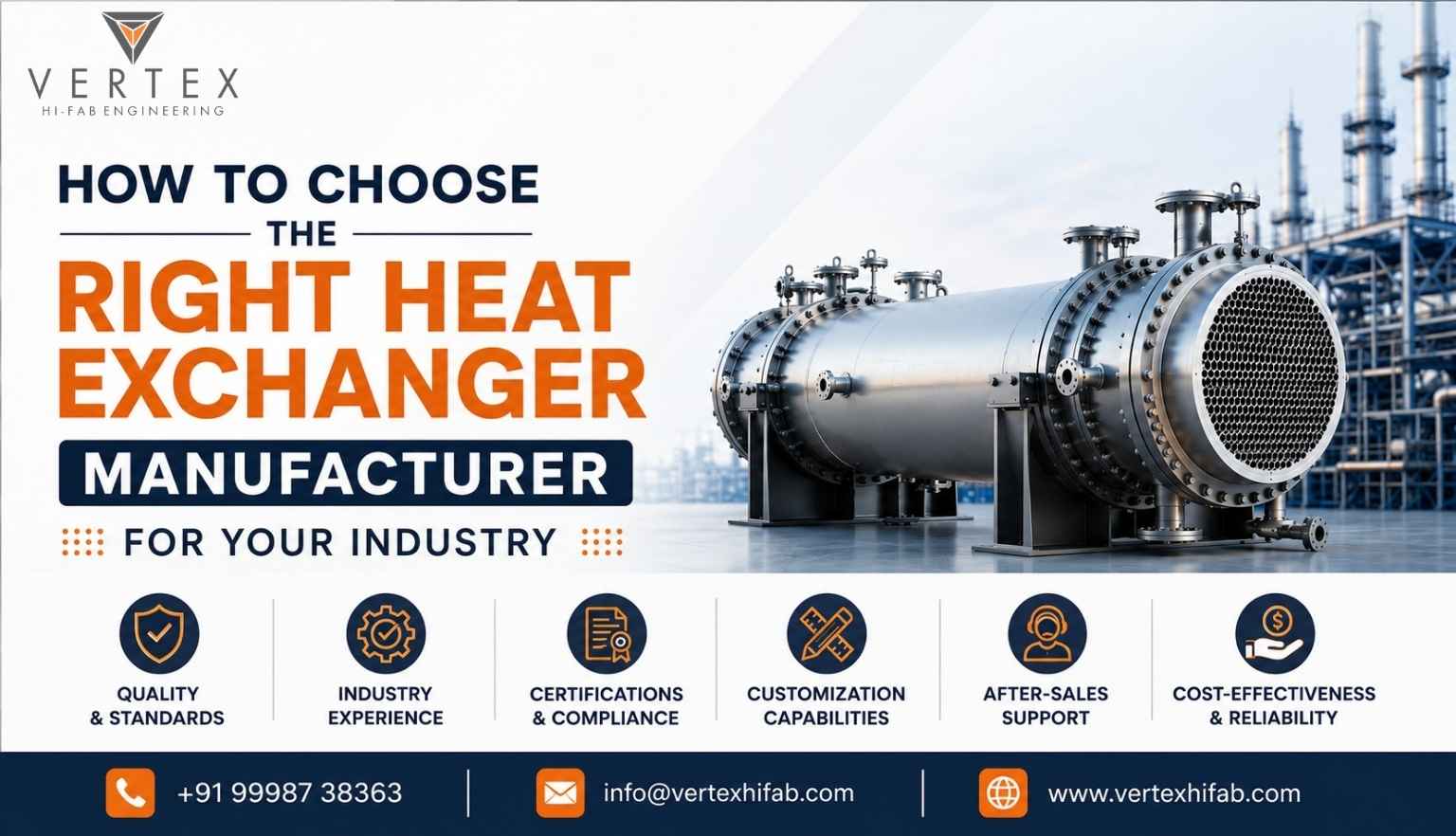

Industrial operations depend on efficiency, reliability, and consistent performance. Whether you operate in the chemical, pharmaceutical, food processing, oil and gas, power generation, or manufacturing sector, heat transfer equipment plays a critical role in maintaining smooth production processes. As a result, selecting the right Heat Exchanger Manufacturer becomes one of the most important decisions for long-term operational success.
A heat exchanger is not simply a piece of equipment. It directly impacts energy efficiency, production quality, maintenance costs, and equipment lifespan. Therefore, choosing the wrong manufacturer can lead to performance issues, increased downtime, and unexpected expenses. On the other hand, partnering with an experienced manufacturer helps improve productivity, optimize thermal performance, and ensure compliance with industry standards.
This comprehensive guide explains how businesses can identify the right manufacturing partner and what factors should influence their decision-making process.
Why Selecting the Right Heat Exchanger Manufacturer Matters
Heat exchangers are used in countless industrial processes where heat must be transferred efficiently between fluids. Since these systems often operate under demanding conditions, quality manufacturing becomes essential.
A reliable manufacturer provides more than just equipment. They contribute engineering expertise, application knowledge, quality assurance, and long-term technical support.
When businesses invest in high-quality heat exchangers, they often experience:
- Improved energy efficiency
- Reduced operational costs
- Lower maintenance requirements
- Enhanced process reliability
- Increased equipment lifespan
- Better safety performance
- Compliance with industry regulations
Consequently, selecting a trusted manufacturing partner creates long-term value beyond the initial purchase price.

The Growing Demand for Industrial Heat Exchangers
Modern industries continue to focus on energy conservation and operational efficiency. Therefore, demand for advanced heat transfer solutions continues to increase across various sectors.
Industries commonly using heat exchangers include:
- Chemical processing
- Petrochemical plants
- Pharmaceutical manufacturing
- Food and beverage processing
- HVAC systems
- Power generation facilities
- Oil and gas operations
- Renewable energy projects
- Water treatment plants
As industrial requirements become more complex, companies increasingly seek manufacturers capable of delivering customized solutions.
Key Qualities of a Professional Heat Exchanger Manufacturer
Choosing a manufacturer requires careful evaluation. Instead of focusing solely on price, organizations should consider several important factors.
1. Industry Experience and Technical Expertise
Experience remains one of the strongest indicators of manufacturing capability.
A manufacturer with extensive industry experience understands:
- Process requirements
- Industry challenges
- Material selection
- Thermal calculations
- Performance optimization
- Safety considerations
Furthermore, experienced engineering teams can recommend solutions that improve efficiency while reducing long-term operating costs.
2. Manufacturing Infrastructure
Advanced manufacturing facilities often indicate higher production quality.
Look for manufacturers with:
- Modern fabrication equipment
- CNC machining capabilities
- Certified welding procedures
- Quality inspection systems
- Testing facilities
- Skilled engineering teams
Strong manufacturing infrastructure helps ensure precision and consistency throughout production.
3. Engineering Support
Not every application requires a standard heat exchanger design.
Many industries operate under unique conditions involving:
- High pressure
- Extreme temperatures
- Corrosive fluids
- Specialized process requirements
Therefore, engineering support becomes essential during equipment selection and design.
How a Heat Exchanger Manufacturer Ensures Product Quality

Product quality directly influences performance, reliability, and equipment lifespan.
A reputable Heat Exchanger Manufacturer follows strict quality control procedures throughout production.
1. Material Selection Standards
Material selection significantly affects durability and performance.
Common materials include:
- Stainless steel
- Carbon steel
- Duplex stainless steel
- Titanium
- Nickel alloys
- Copper alloys
Each material offers specific benefits depending on operating conditions.
For example, pharmaceutical applications often require stainless steel due to its corrosion resistance and hygienic properties. Meanwhile, chemical plants may require specialized alloys to withstand aggressive process fluids.
2. Manufacturing Certifications
Industry certifications demonstrate a manufacturer’s commitment to quality.
Important certifications may include:
- ASME certification
- ISO 9001 certification
- PED compliance
- CE marking
- API standards
These certifications provide confidence that manufacturing processes meet internationally recognized requirements.
3. Performance Testing Procedures
Professional manufacturers perform extensive testing before equipment delivery.
Testing may include:
- Hydrostatic testing
- Pneumatic testing
- Leak testing
- Pressure testing
- Non-destructive testing
- Dimensional inspections
As a result, customers receive equipment that performs reliably under operating conditions.
Understanding Different Types of Heat Exchangers
Before selecting a manufacturer, businesses should understand the various heat exchanger options available.
1. Shell and Tube Heat Exchangers
Shell and tube designs remain among the most widely used heat exchangers in industrial applications.
Benefits include:
- High pressure handling capability
- Excellent thermal performance
- Easy maintenance
- Long service life
- Suitable for large-scale operations
Industries such as oil and gas, chemical processing, and power generation frequently use these systems.
2. Plate Heat Exchangers
Plate heat exchangers offer compact designs and efficient heat transfer.
Advantages include:
- Smaller footprint
- High thermal efficiency
- Easy expansion
- Reduced installation space
- Lower fluid volume requirements
These units are commonly used in food processing, HVAC, and pharmaceutical applications.
3. Air Cooled Heat Exchangers
Air cooled systems eliminate the need for water-based cooling.
Benefits include:
- Water conservation
- Reduced operating costs
- Simplified maintenance
- Environmental sustainability
Consequently, many facilities located in water-scarce regions prefer air cooled solutions.
4. Customized Heat Transfer Systems
Certain industrial processes require specially engineered equipment.
An experienced manufacturer can design:
- Custom shell and tube units
- High-pressure exchangers
- Sanitary heat exchangers
- Corrosion-resistant systems
- Compact process units
Customization ensures optimal performance under specific operating conditions.
How a Heat Exchanger Manufacturer Supports Different Industries

Every industrial application requires unique heat transfer solutions.
An experienced manufacturer understands these differences and develops equipment accordingly.
1. Chemical Industry
Chemical plants often process corrosive fluids under high pressure and temperature.
Manufacturers must design equipment capable of handling:
- Aggressive chemicals
- Continuous operation
- Corrosion
- Thermal expansion
- High-pressure environments
Proper material selection becomes essential in these applications.
2. Pharmaceutical Industry
Pharmaceutical manufacturing demands strict hygiene standards.
Heat exchangers used in this sector require:
- Sanitary design
- Smooth internal surfaces
- Easy cleaning
- High-quality stainless steel
- Contamination prevention
Manufacturers serving pharmaceutical companies must understand Good Manufacturing Practices (GMP) and sanitary fabrication requirements.
3. Food and Beverage Processing
Food processing focuses on product safety and energy efficiency.
Heat exchangers help during:
- Milk pasteurization
- Beverage processing
- Sugar manufacturing
- Edible oil production
- Dairy operations
Manufacturers must ensure hygienic construction while maintaining consistent heat transfer performance.
4. Oil and Gas Industry
Oil and gas applications involve extremely demanding operating conditions.
Equipment must withstand:
- High pressure
- Elevated temperatures
- Corrosive fluids
- Continuous operation
- Harsh environmental conditions
Only manufacturers with proven engineering expertise should supply equipment for these applications.
The Importance of After-Sales Support
Many organizations focus only on initial equipment costs. However, long-term support remains equally important.
1. Technical Assistance
Professional manufacturers provide technical assistance throughout the equipment lifecycle.
Support services may include:
- Operational guidance
- Performance optimization
- Troubleshooting
- Maintenance recommendations
- Spare parts support
Consequently, businesses can minimize downtime and maintain productivity.
2. Maintenance Services
Preventive maintenance extends equipment life and improves efficiency.
Manufacturers offering maintenance support help customers:
- Reduce unexpected failures
- Improve operational reliability
- Lower maintenance expenses
- Extend equipment lifespan
3. Spare Parts Availability
Quick access to replacement components prevents prolonged shutdowns.
Therefore, manufacturers should maintain adequate spare parts inventories and responsive support systems.
Comparing a Standard Supplier vs a Professional Heat Exchanger Manufacturer
Selecting the right material significantly impacts reactor performance, maintenance, and lifespan. The following comparison highlights the major differences.
| Feature | Standard Supplier | Professional Heat Exchanger Manufacturer |
|---|---|---|
| Custom Design | Limited | Fully Customized |
| Engineering Consultation | Basic | Advanced Technical Support |
| Quality Testing | Limited | Comprehensive Testing |
| Industry Knowledge | General | Industry-Specific Expertise |
| Material Options | Few Choices | Multiple Material Grades |
| Compliance Standards | Basic | ASME, TEMA, ISO Standards |
| Energy Efficiency Focus | Moderate | High Efficiency Designs |
| Long-Term Reliability | Average | Excellent |
| Maintenance Support | Limited | Complete Support Services |
| Project Scalability | Restricted | Suitable for Small to Large Projects |
Essential Vessel Features from a Trusted Reactor Manufacturer
Technology continues to transform industrial equipment manufacturing.
Leading manufacturers invest heavily in innovation to improve product performance.
1. Advanced Thermal Design Software
Modern engineering software enables:
- Accurate thermal calculations
- Performance simulations
- Efficiency optimization
- Design validation
As a result, customers receive highly efficient equipment tailored to their applications.
2. Automation and Precision Manufacturing
Advanced manufacturing technologies improve consistency and quality.
Examples include:
- Automated welding
- CNC machining
- Robotic fabrication
- Precision inspection systems
These technologies help manufacturers maintain high production standards.
3. Energy-Efficient Designs
Energy costs continue to rise globally.
Therefore, manufacturers increasingly focus on:
- Heat recovery systems
- Improved thermal efficiency
- Reduced pressure drop
- Lower operating costs
Businesses benefit from significant long-term savings through improved energy performance.
Common Mistakes to Avoid When Selecting a Heat Exchanger Manufacturer
Many organizations make purchasing decisions based solely on price.
Unfortunately, this approach often leads to higher long-term costs.
Avoid these common mistakes:
1. Choosing Based Only on Cost
Low-cost equipment may result in:
- Reduced efficiency
- Frequent maintenance
- Shorter lifespan
- Higher operating expenses
Instead, evaluate total lifecycle value.
2. Ignoring Certifications
Certified manufacturers demonstrate adherence to recognized quality standards.
Failure to verify certifications may expose businesses to compliance risks.
3. Overlooking Technical Support
Without proper support, even high-quality equipment can become difficult to maintain.
Always evaluate after-sales service capabilities before making a decision.
4. Not Reviewing Previous Projects
Past project experience provides valuable insight into manufacturing capabilities.
Request case studies, references, and project portfolios whenever possible.
Future Trends in Heat Exchanger Manufacturing
Industrial heat transfer technology continues to evolve.
Several trends are shaping the future of the industry.
1. Sustainable Manufacturing
Manufacturers increasingly adopt environmentally responsible production practices.
2. Smart Monitoring Systems
Digital monitoring enables:
- Real-time performance tracking
- Predictive maintenance
- Improved reliability
- Reduced downtime
3. Enhanced Energy Recovery
Industries continue to seek methods for recovering and reusing waste heat.
Advanced heat exchanger designs play a crucial role in these initiatives.
4. Industry-Specific Customization
Demand for customized solutions continues to grow as industrial processes become more specialized.
Manufacturers capable of delivering tailored systems will remain highly competitive.
Frequently Asked Questions About Choosing a Heat Exchanger Manufacturer
The best Heat Exchanger Manufacturer should have proven industry experience, certified manufacturing processes, engineering expertise, and customization capabilities. Always evaluate quality standards, project portfolio, and after-sales support before making a decision.
A reliable manufacturer offers high-quality materials, advanced engineering, strict testing procedures, industry certifications, and responsive customer support. These factors ensure long-term performance and operational safety.
Experienced manufacturers understand industry-specific challenges and can recommend the most efficient heat transfer solutions. Their expertise helps improve equipment performance and reduce maintenance costs.
Industries such as chemical processing, pharmaceuticals, food manufacturing, petrochemicals, power generation, and water treatment benefit significantly from customized heat exchanger designs tailored to their processes.
Leading manufacturers typically comply with ISO standards, ASME requirements, API guidelines, and TEMA specifications. These certifications demonstrate commitment to quality, safety, and performance.
By providing optimized thermal designs, proper material selection, and energy-efficient configurations, manufacturers help industries reduce energy consumption and improve overall productivity.
No FAQ found.
Businesses should compare manufacturing capabilities, engineering expertise, certifications, quality control systems, customization options, delivery performance, and customer service support.
Yes. Professional manufacturers offer custom-engineered solutions designed around process conditions, temperature ranges, pressure requirements, fluid characteristics, and industry regulations.
Material selection directly impacts corrosion resistance, thermal efficiency, durability, maintenance requirements, and equipment lifespan. Choosing the right material improves long-term reliability.
Quality manufacturers perform hydrostatic testing, weld inspections, non-destructive testing, dimensional verification, and performance evaluations before equipment delivery.
Strong after-sales support helps with installation, commissioning, maintenance, troubleshooting, and spare parts availability, ensuring smooth operation throughout the equipment lifecycle.
Vertex Hi Fab Engineering provides customized heat exchanger solutions, advanced manufacturing capabilities, strict quality control, and industry-focused engineering support. Their commitment to reliability and performance makes them a preferred choice for industrial applications.
No FAQ found.
Final Thoughts: Finding a Heat Exchanger Manufacturer That Meets Your Industry Needs
Choosing the right Heat Exchanger Manufacturer is a strategic decision that directly affects operational efficiency, equipment reliability, energy consumption, and overall profitability. Manufacturers with strong engineering expertise, proven industry experience, advanced manufacturing capabilities, recognized quality standards, and dependable support services consistently deliver better long-term value.
Before making a final decision, carefully evaluate technical capabilities, customization options, certifications, testing procedures, production infrastructure, and customer support. Investing in a trusted Heat Exchanger Manufacturer ensures superior performance, lower operating costs, enhanced safety, and sustainable industrial growth.
When businesses require dependable heat transfer solutions, Vertex Hi Fab Engineering stands out as a trusted partner. With expertise in designing and manufacturing high-quality heat exchangers for diverse industries, the company focuses on precision engineering, quality compliance, customization, and long-term performance. Whether your application involves chemical processing, pharmaceuticals, petrochemicals, food production, or energy systems, Vertex Hi Fab Engineering delivers reliable solutions tailored to your operational requirements.
Contact Vertex Hi Fab Engineering today to discuss your project and discover how expertly engineered heat exchanger solutions can improve efficiency, reduce operating costs, and support sustainable industrial growth.