

Industrial manufacturing continues to evolve with increasing demands for safety, efficiency, and operational reliability. At the heart of countless production facilities lies one of the most important engineered components—Pressure Vessels. These specialized equipment are designed to safely contain gases and liquids under pressure while ensuring uninterrupted industrial operations.
From chemical processing and pharmaceutical manufacturing to oil & gas refineries, food production, fertilizer plants, and power generation, Pressure Vessels are indispensable assets that directly influence productivity, product quality, and workplace safety.
Choosing the right Pressure Vessels involves much more than selecting a steel container. It requires careful engineering, material selection, precision manufacturing, certified welding, non-destructive testing, and compliance with internationally recognized standards.
In this comprehensive guide, you’ll discover how Pressure Vessels are designed, manufactured, inspected, and utilized across industries—and why investing in high-quality fabrication delivers long-term operational success.
Pressure Vessels Design and Manufacturing Excellence
1: What Are Pressure Vessels?
Pressure Vessels are specially engineered containers designed to store or process liquids, gases, or vapors at pressures significantly different from atmospheric conditions. Unlike ordinary storage tanks, they must withstand high internal or external pressure while maintaining structural integrity throughout their service life.
They are commonly used in:
- Chemical plants
- Petrochemical facilities
- Pharmaceutical manufacturing
- Oil & Gas processing
- Power generation
- Food processing
- Water treatment
- Fertilizer industries
- Hydrogen projects
- Renewable energy systems
Every industry depends on Pressure Vessels to ensure consistent production while protecting personnel, equipment, and the surrounding environment.

2: Engineering Principles Behind Reliable Pressure Vessels
The performance of Pressure Vessels begins long before fabrication starts. Engineering teams perform detailed calculations to determine the safest and most economical design.
Key design considerations include:
- Design pressure
- Operating pressure
- Design temperature
- Corrosion allowance
- Material compatibility
- Wind and seismic loading
- Fatigue analysis
- Nozzle reinforcement
- Thermal expansion
- Equipment supports
Modern engineering software enables precise stress analysis, finite element simulations, and optimization before manufacturing begins.
This engineering-first approach minimizes future maintenance costs while maximizing operational reliability.

Types of Pressure Vessels in India
Different industries require different types of pressure vessels depending on their operating conditions and applications.
1. Storage Pressure Vessels
These vessels are designed to store gases or liquids under pressure for long periods. Examples include compressed gas cylinders and industrial storage tanks.
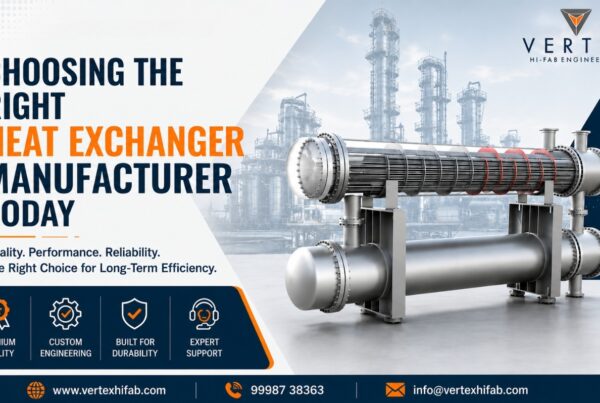
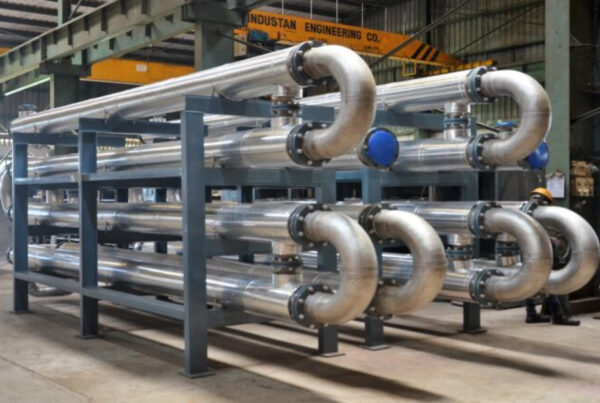
2. Heat Exchanger Pressure Vessels
Heat exchangers are pressure vessels designed to transfer heat between two fluids while keeping them separated. These vessels are commonly used in power plants and chemical processing industries.
3. Process Pressure Vessels
Process vessels are used in the chemical and pharmaceutical industries where chemical reactions or mixing processes occur under pressure.
4. Boiler Pressure Vessels
Boilers generate steam by heating water under pressure. These vessels are essential in power generation and manufacturing facilities.
Material Selection Makes the Difference
Selecting the appropriate material is critical for long service life.
Common materials include:
- Carbon Steel
- Low Alloy Steel
- Stainless Steel 304
- Stainless Steel 316L
- Duplex Stainless Steel
- Super Duplex Stainless Steel
- Nickel Alloys
- Titanium Alloys
The material selection depends on:
- Process fluid
- Operating temperature
- Pressure rating
- Corrosion resistance
- Chloride content
- Product purity
- Design life
Proper material selection reduces corrosion, improves safety, and lowers lifecycle costs.
Precision Manufacturing Process
Manufacturing quality directly affects equipment reliability.
The fabrication process generally includes:
- Raw material inspection
- Plate cutting using CNC machines
- Edge preparation
- Plate rolling
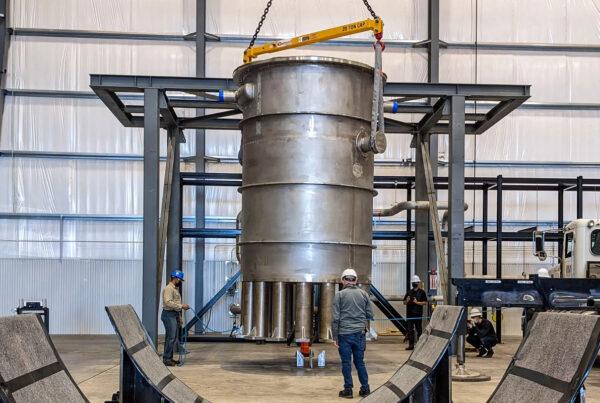
- Shell fabrication
- Dished end forming
- Fit-up inspection
- GTAW, SMAW, SAW, or FCAW welding
- Dimensional inspection
- Heat treatment (if required)
- Surface preparation
- Painting or polishing
- Final testing
Every stage follows documented quality procedures to ensure compliance with customer specifications and international standards.

Quality Inspection and Testing
Quality assurance is never an optional step.
Reliable Pressure Vessels undergo multiple inspections, including:
- Visual Inspection
- Ultrasonic Testing (UT)
- Radiographic Testing (RT)
- Dye Penetrant Testing (PT)
- Magnetic Particle Testing (MT)
- Hydrostatic Testing
- Pneumatic Leak Testing
- Positive Material Identification
- Hardness Testing
- Dimensional Verification
These inspections verify weld quality, dimensional accuracy, structural strength, and leak-free performance before dispatch.
Industrial Uses and Business Value of Pressure Vessels
1: Applications Across Multiple Industries
Few industrial products serve as many sectors as Pressure Vessels.
Typical applications include:
- Chemical reactors
- Mixing vessels
- Storage receivers
- Heat exchangers
- Air receivers
- LPG storage
- Steam separators
- Surge vessels
- Gas storage
- Process columns
- Vacuum vessels
- Autoclaves
Their versatility makes them essential for both continuous production plants and batch processing facilities.
2: Why High-Quality Pressure Vessels Deliver Better Returns
Many businesses focus only on purchase price. However, experienced engineers evaluate total lifecycle value.
Premium-quality Pressure Vessels provide measurable advantages:
- Higher operational safety
- Reduced maintenance costs
- Longer equipment life
- Lower downtime
- Improved process efficiency
- Excellent corrosion resistance
- Better welding integrity
- Higher production reliability
- Compliance with international standards
- Lower lifecycle ownership cost
These benefits contribute directly to increased profitability and plant productivity.
3: Industry Standards That Build Confidence
International codes ensure every vessel meets strict engineering requirements.
Commonly followed standards include:
- ASME Section VIII Division 1
- ASME Section IX
- TEMA
- API Standards
- IS Standards
- EN Standards
- PED Requirements
- ASTM Material Specifications
Manufacturers following these standards deliver equipment trusted by industries worldwide.
4: Emerging Trends in Pressure Vessel Manufacturing
The future of Pressure Vessels is driven by technology and sustainability.
Key innovations include:
- Automated welding systems
- Robotic fabrication
- Digital quality documentation
- 3D design validation
- Smart inspection technologies
- IoT-enabled monitoring
- Hydrogen-ready vessels
- Lightweight high-strength alloys
- AI-assisted production planning
- Sustainable manufacturing practices
These advancements improve accuracy, shorten production time, and enhance product quality.
5: Selecting the Right Pressure Vessel Manufacturer in India
A reliable Pressure Vessels manufacturing partner in Ahmedabad, Gujarat, should offer:
- Experienced engineering team
- Certified welding procedures
- Modern fabrication infrastructure
- Comprehensive quality control
- Custom design capability
- Timely project delivery
- Complete documentation
- International code compliance
- Responsive technical support
- Proven industrial experience
The right manufacturer becomes a long-term engineering partner rather than simply an equipment supplier.
Common Questions About Pressure Vessel Manufacturers in India
Pressure Vessels are specifically engineered to safely contain liquids or gases under pressures above or below atmospheric conditions. Unlike conventional tanks, they are designed using engineering calculations, certified materials, qualified welding procedures, and pressure testing to ensure long-term structural safety.
Design pressure is established by evaluating the maximum operating pressure, possible pressure fluctuations, safety margins, process requirements, and applicable engineering codes. This ensures the vessel continues operating safely even during abnormal process conditions.
Pressure Vessels are widely used in:
Chemical manufacturing
Petrochemical plants
Pharmaceutical production
Oil & Gas facilities
Food processing
Power generation
Fertilizer plants
Water treatment
Renewable energy
Hydrogen processing
Pressure-containing welds experience continuous mechanical and thermal stresses. Certified welding procedures, qualified welders, and proper inspection significantly reduce the risk of leaks, failures, and costly production interruptions.
Yes. Modern manufacturers design customized Pressure Vessels based on operating pressure, temperature, media characteristics, available installation space, nozzle orientation, insulation requirements, and customer-specific process conditions.
The best material depends on the process fluid. Stainless steel, Duplex Stainless Steel, Super Duplex, Nickel Alloys, Titanium, and specialized corrosion-resistant alloys are commonly selected for highly aggressive environments.
No FAQ found.
Quality verification includes multiple inspections such as:
Visual Inspection
Radiographic Testing
Ultrasonic Testing
Dye Penetrant Testing
Hydrostatic Testing
Dimensional Inspection
Material Traceability Verification
These inspections confirm compliance with project specifications and design standards.
Service life depends on several engineering and operational factors including:
Material quality
Corrosion rate
Welding integrity
Operating pressure
Operating temperature
Maintenance practices
Inspection intervals
Process control
Proper operation and preventive maintenance significantly extend equipment life.
Yes. Pressure Vessels can be designed for elevated temperatures using appropriate materials, thicker shell sections, thermal stress calculations, and heat-resistant alloys suitable for demanding industrial applications.
Manufacturers complying with recognized codes such as ASME provide equipment that meets globally accepted engineering, fabrication, inspection, and safety requirements. This improves reliability, simplifies project approvals, and enhances long-term operational confidence.
Ahmedabad, Gujarat, has become one of India's leading industrial engineering and fabrication hubs. Choosing a Pressure Vessel manufacturer from Ahmedabad, Gujarat offers advantages such as advanced manufacturing infrastructure, experienced fabrication teams, competitive pricing, faster production, and adherence to international quality standards. Many manufacturers in Ahmedabad serve industries including chemical, pharmaceutical, petrochemical, food processing, power, and oil & gas with custom-engineered pressure vessel solutions.
Yes. A reliable Pressure Vessel manufacturer and supplier from Ahmedabad, Gujarat can deliver custom-designed equipment to industrial projects across major Indian cities, including Mumbai, Pune, Delhi, Noida, Gurugram, Jaipur, Ahmedabad, Vadodara, Surat, Rajkot, Indore, Bhopal, Hyderabad, Chennai, Bengaluru, Coimbatore, Kochi, Kolkata, Bhubaneswar, Visakhapatnam, Nagpur, Nashik, Lucknow, Kanpur, Chandigarh, Ludhiana, Jamshedpur, Ranchi, Raipur, and Goa. Professional manufacturers also provide engineering support, documentation, inspection, secure packaging, and timely delivery to meet project schedules nationwide.
No FAQ found.
Conclusion: Pressure Vessels Delivering Safe Industrial Performance
Industrial success depends on equipment that delivers consistent performance, maximum safety, and long-term reliability. Pressure Vessels are among the most critical assets in process industries, serving as the backbone of safe storage, reaction, heat transfer, and pressure-controlled operations. From accurate engineering calculations and premium material selection to precision fabrication, certified welding, and comprehensive quality inspection, every stage of manufacturing contributes to the vessel’s durability and operational excellence.
Whether your application involves chemical processing, pharmaceuticals, petrochemicals, food production, energy, or specialized industrial projects, investing in expertly manufactured Pressure Vessels ensures improved efficiency, reduced maintenance, and dependable plant performance for years to come.
If you’re looking for custom-engineered Pressure Vessels manufactured to international quality standards, Vertex Hi-Fab Engineering offers tailored fabrication solutions designed to meet the unique demands of modern industries. Our experienced team combines engineering expertise, advanced manufacturing capabilities, and rigorous quality control to deliver reliable equipment for critical industrial applications.
Explore our Pressure Vessel solutions and discuss your project requirements today:
https://www.vertexhifab.com/product/pressure-vessel/